01628 436 494
Thames Valley Drones

Drone Roof Survey in Sussex

Thames Valley Drones offers a drone roof survey in Sussex as a practical way to get a clear, accurate picture of a roof’s condition without scaffolding, access platforms, or disruption to the building or site. A CAA-qualified pilot flies a camera-equipped drone around your building and photographs the areas that cannot be seen from the ground, with high-resolution images delivered the same day.

Get in touch
Drone Roof Survey in Sussex

What Is a Drone Roof Survey?

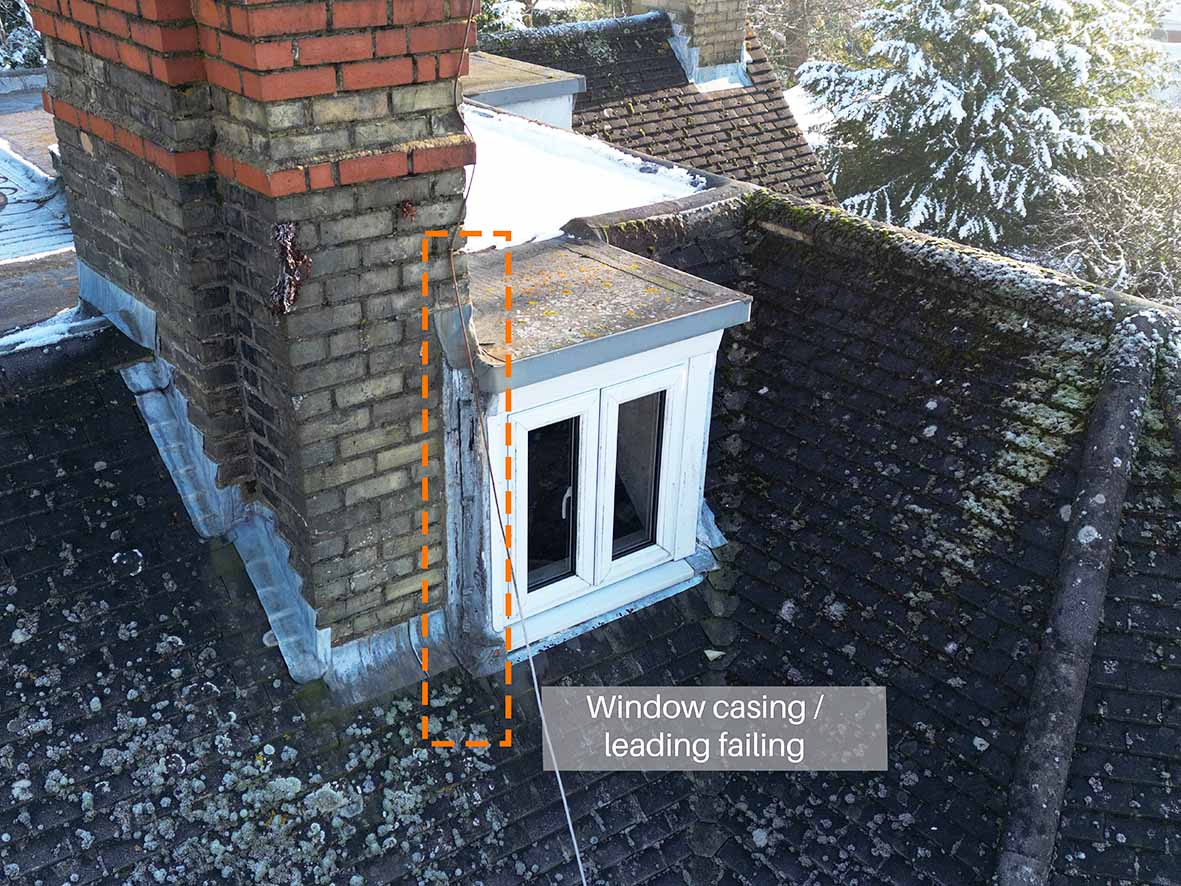
A drone roof survey in Sussex involves a CAA-qualified pilot flying a camera-equipped drone around your building to capture high-resolution images of the roof from angles that simply cannot be achieved from the ground. The result is a clear, detailed photographic record of the roof’s condition, delivered digitally the same day, without scaffolding, access platforms, or anyone walking on the surface.

It is a straightforward process. We arrive, plan the flight around your specific building, and systematically cover the roof in full: membrane surfaces, gutters and downpipe outlets, parapet walls and copings, flashings, lead valleys, ridge lines, chimneys, drainage channels, and any rooftop plant or equipment. The images are organised and labelled when they reach you, so they are immediately useful rather than a disorganised folder of photographs that needs sorting before anyone can act on them.

How the Survey Is Structured

No two buildings are the same, so each survey is planned individually. The flight typically begins with a broader pass to capture overall context, then works through the details methodically: drainage outlets and guttering, flashings at abutments and around rooflights, chimney stacks and their pointing, parapet copings, ridge and verge details, and anything at roof level that looks like it might need attention.

Buildings with both pitched and flat sections, a common arrangement on older commercial premises and extended properties throughout Sussex, are covered in full. The combination of wide contextual shots and closer detail passes means nothing is missed, and a contractor reviewing the images has everything they need to price a job or plan an inspection visit accurately.

Why Sussex Properties Benefit from Regular Roof Inspections

The county’s geography plays a significant role here. Properties along the coast, from Chichester Harbour in the west through to Hastings and Rye in the east, are exposed to salt air, prevailing south-westerly winds, and the kind of driven rain that finds its way into small defects quickly. Flashings corrode faster. Mortar joints in older construction deteriorate more rapidly. Lead work that might last decades further inland can need attention sooner in a coastal location.

Storm damage is one of the most common reasons people book a drone roof survey in Sussex. After significant weather, knowing exactly what has happened to a roof before instructing a contractor avoids guesswork and means repair costs are based on what is actually there, not an estimate.
Persistent leaks are another. A leak that cannot be traced from inside a building is frustrating and often expensive to diagnose through trial and error. Roof photographs give a contractor a specific starting point rather than a general area to investigate.

Pre-purchase inspections, routine condition checks, insurance claims, and baseline surveys ahead of planned refurbishment work are all equally common reasons. The underlying need in each case is the same: accurate visual evidence of what the roof looks like right now.

Who We Work With

Our clients across Sussex include building and land surveyors, roofing contractors, facilities and estates agents, housing associations, property managers, construction firms, commercial landlords, architects, insurers, and loss adjusters. We work with housing associations managing residential stock across coastal and inland areas, facilities teams covering schools and healthcare buildings, commercial landlords with estates in Crawley, Horsham, and Haywards Heath, and private owners of older rural properties across the South Downs and the High Weald.

We also regularly work with clients whose portfolios span more than one county. As well as Sussex, we cover Berkshire, Buckinghamshire, Essex, Gloucestershire, Hampshire, Kent, Oxfordshire, Northamptonshire, Surrey, and Warwickshire, so a single point of contact covers multi-county property portfolios without any complications.

Sussex’s Varied Building Stock

One of the things that makes Sussex particularly interesting from a roofing perspective is just how different the county’s buildings are from one area to the next.

Coastal towns and seafront properties

Brighton, Hove, Worthing, Eastbourne, Hastings, Bognor Regis, Littlehampton, and Shoreham-by-Sea all have significant concentrations of Victorian and Edwardian buildings. Slate roofs, clay tile, and lead are common, often alongside flat-roofed rear extensions and bay window roofs that are awkward to see properly from street level. The salt air and exposure that come with seafront locations make these roofs some of the most worthwhile candidates for regular inspection.

Historic towns and rural areas

Lewes, Rye, Arundel, Battle, Midhurst, and Petworth are built around older construction — flint walling is characteristic of much of rural Sussex, and the roofs on older buildings here often use stone slate, clay peg tile, or lead that is not safe to walk on. A drone never contacts the surface, which means there is no risk of the inspection itself causing damage, something that matters considerably on listed or historic buildings.

Inland commercial and residential areas

Crawley, Horsham, Haywards Heath, Burgess Hill, and East Grinstead present a different picture: commercial estates, retail units, modern residential developments, and industrial premises with flat or low-pitch roofs. Single-ply, EPDM, felt, and GRP membranes are common across these areas, often with rooftop plant, drainage outlets, and penetrations that require periodic checking. A drone roof survey in Sussex covers all of this efficiently and without disrupting site operations.

We inspect all roof types: felt, single-ply, EPDM, GRP, lead, slate, clay tile, clay peg tile, concrete tile, and metal standing seam.

Our Other Services

Drone roof surveys are one part of what we offer. Thames Valley Drones provides a full range of aerial and ground-based services, and where a single site visit can cover more than one requirement, we will plan it that way.

Our services include drone roof inspections, commercial drone roof surveys, residential drone roof inspections, aerial site surveys and inspections, aerial building inspections, land surveying and mapping, 2D mapping and 3D modelling, property and landscape photography, video, and ground, exterior, and interior photography.
If you have a requirement that sits alongside a roof survey, aerial photography of a site, a building inspection, or ground-level photography of a property, it is worth mentioning when you get in touch.

Drone Roof Survey in Sussex

A drone roof survey in Sussex is a straightforward, cost-effective way to understand the condition of a roof before making any decisions about access, repairs, or maintenance. If you have a building you need to look at, get in touch and we will talk through what is involved.

What You Receive

Images are delivered digitally on the day of the survey, clearly organised and labelled by location on the roof. For most clients, a roofer, a building surveyor, a property manager keeping records, that set of images is all that is needed.

Commercial and facilities clients can request marked-up images with a numbered issue key, making it straightforward to cross-reference observations with specific roof locations and assign follow-up actions without ambiguity. For roofs that need monitoring over time, we retain the flight plan so that repeat surveys are directly comparable. Video is available on request.

The Case Against Scaffolding for Inspections

Access equipment is the right choice when physical work needs to be carried out at height. For an inspection, it frequently creates more problems than it solves.

Erecting scaffold on a busy seafront road in Brighton or Worthing means dealing with the local authority, potential road closures, and lead times that rarely fit around a straightforward inspection requirement. In conservation areas like Lewes Old Town, Rye, or Arundel, scaffold on or adjacent to a historic building carries its own complications. On an operational commercial site in Crawley or Horsham, bringing in a MEWP means ground assessments, exclusion zones, and a working day, or more, of disruption, simply to get a look at the roof.

Most drone surveys of a single building are done an d dusted within a morning. The site carries on as normal, and the images are with the client the same day.

Compliance and Qualifications

All pilots hold the CAA A2 Certificate of Competency, covering legal aerial operations in residential, commercial, and built-up environments. Flights are planned and conducted to GVC PDRA-01 standards. We carry full public liability insurance, hold CITB CSCS accreditation for construction site access, and prepare a site-specific method statement and risk assessment for every project before arriving on site.

Frequently Asked Questions

How much time does a survey take on site?

Most single buildings are completed in one to two hours from arrival. Multi-building sites and larger premises are scoped individually before we book the visit.

What format are the images delivered in?

High-resolution digital images, clearly labelled and organised. Marked-up versions with an issue key are available for commercial clients. Video can be included on request.

What happens if the weather is not suitable?

We check conditions before every visit and will reschedule if they are not right for safe flying and good image quality. We do not fly in conditions that would compromise either.

Do you cover the whole of Sussex?

Yes, East Sussex and West Sussex in full. This includes Brighton, Hove, Worthing, Crawley, Horsham, Chichester, Eastbourne, Hastings, Lewes, Bognor Regis, Haywards Heath, Burgess Hill, East Grinstead, Shoreham-by-Sea, Littlehampton, Arundel, Midhurst, Rye, Battle, Uckfield, Crowborough, Seaford, Newhaven, and the surrounding towns and villages.